










How to Hire iOS Developers in 2026: A Complete Guide
Hiring iOS developers may seem simple initially, but the real challenges emerge once you’re faced with app store deadlines, debugging…

AppVerticals builds native iOS applications in Swift, engineered for privacy, regulatory compliance, and integration with enterprise systems. Every build is delivered against a defined iPhone and iPad device matrix, released through App Store Connect, and supported through each annual iOS release under an agreed SLA.
A decade of Apple-platform delivery, measured four ways.
250 +
iOS apps shipped to the App Store
1M +
Downloads on apps we built
10 +
Years of Apple-platform engineering
96 %
First-submission App Store approval rate
iphone application development services cover the full build of an iPhone or iPad application: discovery, UX and UI design, native Swift engineering, backend and API work, QA across a defined physical device matrix, security testing, App Store submission and post-launch support. In the United States a production iOS app typically costs $30,000 to $140,000 and takes three to six months. The two variables that move those numbers most are the range of Apple devices and iOS versions you support, and whether the product justifies native Swift over a shared codebase.
Every iOS app project starts with choosing the right technical foundation, how broadly to support Apple devices and iOS versions, and whether native Swift or a shared codebase best fits the product goals. Explore the iOS app development services that help turn these decisions into a scalable, market-ready application:
As a custom iOS app development company, we audit your product idea, existing codebase, or roadmap against Apple platform requirements before writing code. Teams with legacy applications start here because choosing whether to refactor or rebuild can affect the budget more than any individual feature.
We run technical feasibility on the risky components first, usually camera, ARKit, background processing or a third-party SDK with unclear privacy behavior. Where an Objective-C or UIKit codebase already exists, we read it rather than survey it, and report what the architecture will and will not support. The engagement concludes with a written product brief, a recommended architecture, an App Store review risk list and a transparent fixed-fee or time-and-materials estimate.
We build iOS products around your workflow instead of fitting your workflow to a template. That starts with a written product brief that fixes scope, then an architecture chosen against your integration load and role structure.
Swift and SwiftUI power the front end, delivering a modern, adaptive iOS experience across iPhone and iPad, while the backend is selected to align with your existing technology stack. During discovery we define core features, user flows, technical requirements, integrations and scalability needs. We identify technical challenges early and establish the development approach that reduces risk, then close with a product brief, a recommended architecture, a roadmap and a fixed-fee or time-and-materials estimate.
Native iOS app development means Swift or Objective-C compiled against Apple frameworks. Our Swift app development services give you same-day access to new iOS APIs and direct use of device capability with no framework vendor in between.
We use SwiftUI for declarative interface work and adaptive layout across window size classes, dropping to UIKit where gesture handling or custom drawing demands it. Concurrency runs on async/await with Combine where reactive streams fit the problem. Dependencies come through Swift Package Manager. As a native iOS app development Agency we hold the Secure Enclave, Keychain and on-device inference inside our own build rather than behind a bridge layer.
Design follows Apple Human Interface Guidelines and your brand system, then ships as a reusable SwiftUI component library so later features stay visually consistent without a redesign cycle.
We prototype in Figma, test flows with users from your target segment, then build the component library in SwiftUI so the design system and the codebase stay in step. Accessibility is specified at design time rather than patched during QA, covering Dynamic Type at the largest supported size, VoiceOver labeling and contrast against WCAG AA. Every screen carries an annotation set that tells the engineer what adapts on iPad and what stays fixed.
We build and connect the services your iOS application depends on, and where you already own a backend, we integrate against it and document every contract we consume.
Networking runs through URLSession with Codable models and typed error handling, so a schema change surfaces at compile time rather than in production. Persistence uses Core Data or SwiftData depending on the model complexity and the iOS versions in scope. Where the product needs cross-device continuity inside the Apple ecosystem, CloudKit removes an entire backend surface. We document every endpoint contract and hand it over with the code.
We migrate Objective-C codebases to Swift and convert UIKit screens to SwiftUI in stages, so the app stays shippable throughout and your release cadence survives the work.
We start with an audit that measures crash rate, build time, dependency age and the volume of code with no test coverage. Migration then runs one module per phase, with characterization tests written before the rewrite so regressions surface immediately. UIKit screens move to SwiftUI through hosting controllers, which lets both frameworks live in the same binary while the transition completes. You get a measured before-and-after rather than an assertion that the code is cleaner.
Automation catches regressions and physical hardware catches everything else. We test on real iPhone and iPad units across the iOS versions your user base actually runs.
Simulators run the fast feedback loop, and physical devices settle the questions simulators cannot: thermal throttling, camera and LiDAR behavior, background task suspension, low-storage conditions and battery drain. We test the oldest supported iPhone in the matrix rather than only the newest, because that device sets the performance floor. You receive a device coverage matrix and a triaged defect log separating screen-size findings from iOS-version findings.
We prepare and submit under your App Store Connect account, then maintain the product through each annual iOS release under an agreed SLA.
Submission covers metadata, screenshots for every required display size, privacy manifests, App Privacy disclosures, account deletion compliance and the reviewer notes Apple asks for. Our checklist tracks App Review guideline changes, which is how first-submission approval holds at 96 percent. After launch we watch crash-free sessions and performance regressions, prioritize against real usage, and prepare each iOS compatibility update before the release rather than after users report breakage.
Send the product idea and your current iPhone and iPad install-base split. Within 48 hours a US-based solution architect comes back in writing with a platform call, the device and iOS version range worth supporting, and a cost band. If the answer is cross-platform, we will say so, and the recommendation is yours whether or not you hire us.
A native iOS app of medium complexity typically costs $55,000 to $140,000. Simple builds start around $30,000. Products with ARKit, on-device Core ML, connected hardware or regulated compliance run above $140,000.
Device and OS breadth is the variable most teams underestimate. Supporting iOS 15 and up from iPhone SE through the current Pro Max and across iPad is a different QA engagement from supporting iOS 17 and up on recent iPhones, and the difference is measured in weeks rather than days. After that: user role count, offline requirements, hardware features like camera, LiDAR, ARKit or Core ML, the number of legacy systems in scope, and whether HIPAA, PCI DSS or SOC 2 apply.
Discovery, UX design, Swift engineering, backend, QA across the agreed device matrix, App Store release and 30 days of post-launch optimization. Cloud hosting, third-party licenses and the $99 annual Apple Developer Program fee are itemized separately.
Portfolio average is 4.2 months from kick-off to App Store approval. What decides where you land is settled before engineering starts.
First response in US business hours. The first question is what your users actually run, because the iPhone, iPad and iOS version split decides the QA scope.
Explore Our Development ProcessYou receive a platform recommendation, a written device and iOS version coverage matrix, and a fixed-fee estimate priced against that matrix rather than against a guess.
See How We Plan ProjectsYour iOS pod is assembled and sprint one opens with defined goals and a device list already agreed.
See How We Build AppsRegulatory sign-off adds four to eight weeks in healthcare and finance. Enterprise security audits add two to four. Undocumented legacy systems add however long the archaeology takes. iOS contributes a fourth that the other three do not explain: App Review. A rejection on privacy disclosure, account deletion or metadata costs a round trip of days, and three round trips cost a sprint. We run the submission audit in discovery and price against it.
Industry changes what the app has to survive rather than what it looks like. A logistics driver app has to work with no signal in a loading bay. A healthcare app has to log every access event before it does anything else. A retail app is judged on one number, which is completed purchases. Find your sector below and explore how our iOS app development services cater to your exact needs.
Healthcare iPhone app development carries the heaviest compliance load of anything we build. You get patient-facing apps, clinical documentation tools and remote monitoring products that read HealthKit and Apple Watch data under explicit consent, encrypt protected health information in the Keychain, and log every access event for your auditors. We scope HIPAA-aware workflows during discovery, so compliance shapes the architecture instead of arriving as a fix three weeks before launch.
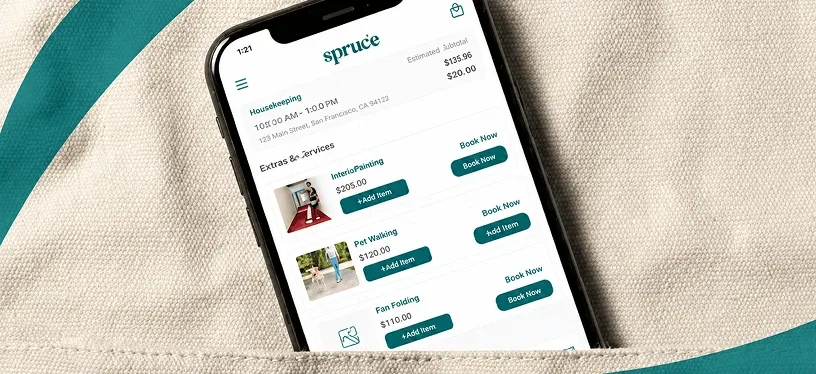
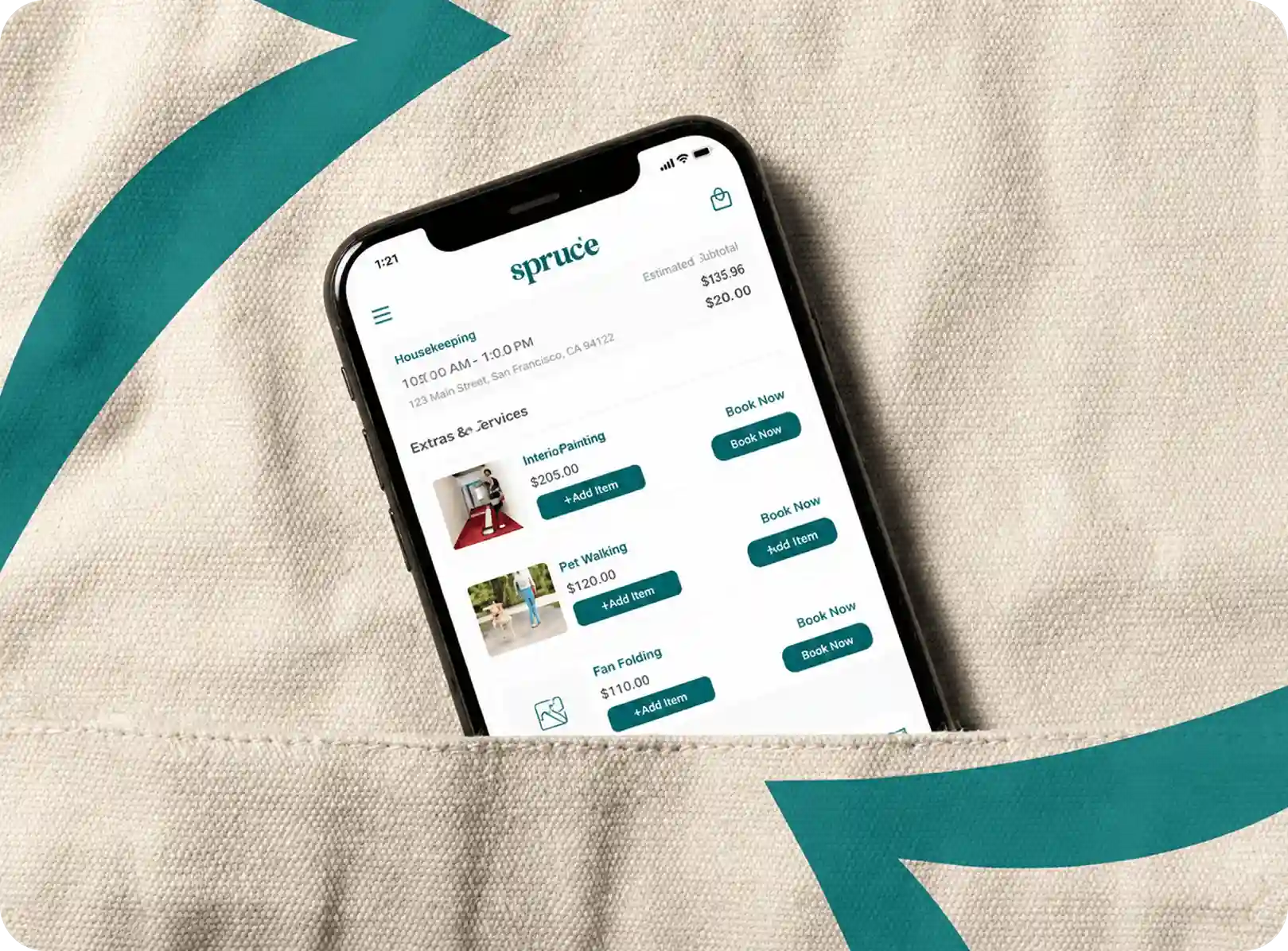
Custom iOS app development for real estate lives or dies on field conditions. Your agents shoot listing photos in basements, run inspections in buildings with no signal, and abandon anything that stalls on a map screen. We handle location natively through MapKit and queue inspection records in Core Data until the device reconnects. Our Spruce engagement rebuilt a multi-role property services platform now covering 6,477 properties, 685,000 customers and 7,581 property management companies across US markets.
iOS application development for logistics starts from the assumption that the network will fail. Your drivers, dispatchers and warehouse teams get Core Data-backed queues that survive a full shift offline, background location built to the permission model App Review actually approves, and conflict-safe sync that resolves cleanly the moment a device reconnects. Barcode and proof-of-delivery capture run on device through AVFoundation, so nothing waits on a signal.
iPhone app development services for education answer to two buyers at once: the institution paying for it and the family using it. You get offline lesson access, subscription and license billing through StoreKit, and privacy handling built for Apple’s Kids Category rules. We delivered an AI storytelling product natively on iOS for caregivers of children aged two to ten, where voice content and child profile data settled the consent design before we drew a single screen.
iOS mobile app development services for ecommerce are judged on completed purchases rather than session length. Apple Pay removes most of your checkout friction on day one, and StoreKit handles subscriptions and in-app purchases against Apple’s current rules. When the product has to be seen before it sells, ARKit places it in your buyer’s own space, which is exactly the pattern behind the AR pool design build further down this page.
Apple reviews every build before it reaches users, and App Review rejects apps that overreach on permissions or mis-declare what they collect. Every design decision below assumes the device is jailbroken and the binary has already been inspected.
Credentials live in the Keychain, never in UserDefaults or the app bundle. Sensitive logic stays server-side where a jailbroken device cannot reach it. Face ID and Touch ID gate privileged actions through Local Authentication, and App Transport Security carries every request with certificate pinning where the threat model calls for it.
Healthcare, fintech and commerce builds are designed with compliance-ready workflows, including HIPAA-aware data handling and PCI-aware payment flows, scoped in discovery rather than retrofitted before launch. Privacy manifests and App Privacy disclosures describe what the app actually does, which is what App Review checks.
You receive source code, repositories, design files, documentation, deployment notes and the App Store Connect account, so you can maintain and scale independently. This holds under every engagement model, including team augmentation.
Protected endpoints, TLS 1.3 in transit, AES-256 at rest, certificate pinning where required.
Role-based permissions, OAuth 2.0 with JWT, Face ID and Touch ID through LocalAuthentication.
DeviceCheck and App Attest verification, jailbreak detection, plus OWASP MASVS scanning on every release candidate.
Complete codebase, documentation, deployment assets and App Store Connect transfer at launch.
Launch with the product, the codebase and the Play Console account you need to scale without depending on us.
While the seven-stage delivery framework remains consistent with our broader mobile app development process, iOS projects introduce unique considerations at three critical stages. These stages have the greatest impact on timelines, technical decisions, and overall delivery risk for Apple-platform applications.
Alongside the product brief, discovery ends with a written device and iOS version coverage matrix: minimum supported iOS, iPhone and iPad models, screen size classes and orientation behavior. This is the single most useful artifact on an iOS project, because it converts test on iOS into a finite scope. We price the estimate against it. If you want the matrix widened later, we quote the difference rather than absorb it silently into the timeline.
Deliverable: device and iOS version coverage matrix, signed off before sprint one
Simulators run the fast loop. Physical devices settle the questions simulators cannot answer: thermal throttling on sustained camera or ARKit work, background task suspension, low-storage behavior, battery drain and true LiDAR output. We test the oldest supported iPhone in the matrix as deliberately as the newest, because that device sets the performance floor your reviews will reflect.
Apple ships a major iOS version every September and deprecates APIs on its own schedule. We put that date in the plan at kick-off and stage the rollout through TestFlight internal, then external testing, before a phased App Store release. App Review adds a round trip measured in days, so the submission audit runs before the build is frozen rather than after.
iOS capacity is usually the constraint rather than mobile capacity in general. Teams have an Android engineer and no Swift, or a Swift engineer and no bandwidth before a release deadline. Whether you need a full iOS app development team or you want to hire a dedicated ios app developer, all three models below staff from the same pool of iOS developers with five or more years of production work.
Companies without in-house mobile engineering capabilities who need a turnkey solution.
A complete product squad comprising:
Teams with an Android gap or a deadline problem needing immediate specialized talent.
Hire expert Android app developers who integrate
seamlessly into your existing workflows:
Teams with an iOS gap on a deadline needing immediate specialized talent.
Hire dedicated iOS app developers who integrate directly into your existing workflows. Slack, Jira, repos. Working under your tech lead.
Thirty minutes with a solution architect. If you have App Store Connect or analytics data, bring it, because your existing iOS version and device split is the fastest route to an accurate estimate. You leave with a platform call and a cost band. The written Product Brief follows in three business days, NDA first.
Two native Swift builds and two cross-platform, so you can see the reasoning rather than take the claim.
An obituary platform where users find, post and claim listings. Search latency and readability carried the entire product, so the build went native in Swift rather than through a wrapper. Live on the App Store.
Stack follows the shape of the problem. Each choice below exists for a reason we can state.
Swift is the default for new products because type safety and structured concurrency remove entire categories of production crash. SwiftUI gives declarative UI that adapts across window size classes without a parallel iPad codebase, with UIKit retained where custom drawing or gesture handling demands it.
MVVM separates business logic from screens so the logic stays testable, and Clean Architecture takes over once role count and integration load grow.
The backend is chosen against your existing stack rather than our preference.
Xcode and Swift Package Manager define the build. XCTest and XCUITest run on every commit through CI. Instruments profiles memory, leaks and frame timing before a build is frozen, and TestFlight carries release candidates to your stakeholders ahead of App Store submission.
These frameworks are the reason to go native. ARKit and LiDAR for spatial capture, Core ML for on-device inference that keeps user data off a server, HealthKit for clinical and fitness data under explicit consent, StoreKit for subscriptions, and AVFoundation for camera, audio and document capture.
Most vendors describe how they work. These are the six things we commit to in writing before you sign, and the ones worth asking any iOS app development firm to match.
The engineer on your build has shipped iOS specifically, not React Native with an iOS target. That distinction shows up in SwiftUI view identity and state handling, in Core Data concurrency rules, and in the background execution limits Apple enforces differently from every other platform. A US-based solution architect leads the engagement.
Spruce sits on this page as a cross-platform recommendation we made and stand behind. An iphone app development company that recommends native every time is describing its bench, not your product. We score four factors in discovery and give you the reasoning in writing, including the argument against our own recommendation.
Minimum supported iOS, iPhone and iPad models, screen size classes and orientation behavior are agreed and signed before sprint one, and the estimate is priced against that document. Widening it later gets quoted rather than absorbed. Most schedule overruns on iOS trace back to a matrix nobody fixed.
Source code, repositories, design files, cloud accounts and the Play Console account transfer as work is delivered rather than at the end. If the engagement stops, you keep everything produced to that point.
A pre-submission audit runs against current App Review guidelines before every release, covering privacy manifests, App Privacy answers, permission strings, account deletion and metadata. App Review rejections cost days each, and three of them cost a sprint.
We have shipped 250 iOS apps with a combined 1 million downloads and hold a 4.7 rating on Clutch. Every client named on this page has a live App Store listing you can open right now, and AppVerticals is an Inc. 5000 honoree.
Hiring iOS developers may seem simple initially, but the real challenges emerge once you’re faced with app store deadlines, debugging…
iOS app development is competitive, and execution matters: in 2024, Apple reviewed 7.77 million App Store submissions and rejected 1.93…
iPhone app development cost in 2026 runs from $99 to more than $400,000, and that gap is not vagueness, it…