











Android App Development Services in USA
AppVerticals build native Android applications engineered for security, regulatory compliance, and integration with enterprise systems. Every build is delivered against a defined device matrix, released through Google Play, and supported through each annual Android release under an agreed SLA.
A decade of Android delivery, measured four ways.
350 +
Android mobile apps shipped
1M +
Active users on apps we built
10 +
Years of engineering expertise
96 %
First-submission store approval rate
Android app development services cover the full build of an Android application: discovery, UX and UI design, native Kotlin engineering, backend and API work, QA across a defined physical device matrix, security testing, Google Play submission and post-launch support. In the United States a production Android app typically costs $30,000 to $140,000 and takes three to six months. The two variables that move those numbers most are the breadth of device support required and whether the product justifies native Kotlin over a shared codebase.
Android App Development Services We Deliver
Two decisions shape every Android engagement, and both get made before engineering starts: how wide the device support runs, and whether Kotlin is worth the premium over a shared codebase. Explore which of these services matches your business requirements:
Custom Android App Development
We build custom mobile apps in Android around your workflow instead of fitting your workflow to a template. That starts with a written product brief that fixes scope, then an architecture chosen against your integration load and role structure.
Key Benefits & Outcomes
- Source code, design files and IP transfer to you in full
- Architecture chosen against your integration load
- A written product brief governs scope before development
- Built to extend, so year-two features don’t require a rewrite
Technologies & Process
Kotlin and Jetpack Compose power the front end, delivering a modern, responsive, and scalable Android experience, while the backend is selected to align with your existing technology stack and product requirements. During discovery, we define the core features, user flows, technical requirements, integrations, and scalability needs. We also identify potential technical challenges early and establish the right development approach to reduce risks and avoid costly changes later. The process concludes with a clear product brief, a recommended architecture, a detailed development roadmap, and a transparent fixed-fee or time and materials estimate.
Native Android Development
We write new Android products in Kotlin against Android-native frameworks, with Jetpack Compose for UI and Material Design 3 for platform conventions. Where we inherit a Java codebase, we extend it in place rather than force a rewrite. One clarification worth making: Flutter and React Native are cross-platform, and we do not call them native, whatever the sales deck says.
Key Benefits & Outcomes
- Day-one support for new Android releases and APIs
- Direct access to camera, sensors, Bluetooth, NFC and on-device inference
- Foldable, tablet and large-screen layouts handled at design stage
- Predictable behavior under thermal throttling and low-memory conditions
Technologies & Process
Kotlin and Jetpack Compose for UI, Material Design 3 for platform conventions, MVVM and Clean Architecture for structure, Coroutines for asynchronous work, Room for persistence, Retrofit for REST and GraphQL, Hilt for dependency injection. Typical range is $30,000 to $140,000 over three to six months.
Android UI/UX Design
The Android mobile app design problem is that a layout correct on one phone breaks on the next. We design against window size classes rather than against a device, and hand over a system your engineers can extend without calling us.
Key Benefits & Outcomes
- Compact, medium and expanded window layouts delivered together
- Foldable fold-state and continuity behavior specified, not left to the framework
- A full design system: components, tokens, typography, motion specs
- WCAG 2.2 AA with TalkBack labeling and touch target sizing designed in
Technologies & Process
User flow mapping, low-fidelity wireframes, then a clickable Figma prototype tested before engineering starts. Material Design 3 throughout. Every design file transfers to you at handover.
Backend and API Development
We build the services your Android app depends on, in parallel with the app rather than after it. That covers offline-first sync with conflict resolution, WorkManager jobs tuned against OEM battery restrictions, and APIs documented in OpenAPI so nothing lives only in one engineer’s head. Android products fail at the seam between client and backend, and they fail hardest where connectivity is unreliable.
Key Benefits & Outcomes
- Offline-first sync with conflict resolution for field and warehouse use
- WorkManager constraints tuned against OEM battery restrictions
- APIs documented in OpenAPI so nothing lives only in someone's head
- Integration into systems that predate the app by a decade
Technologies & Process
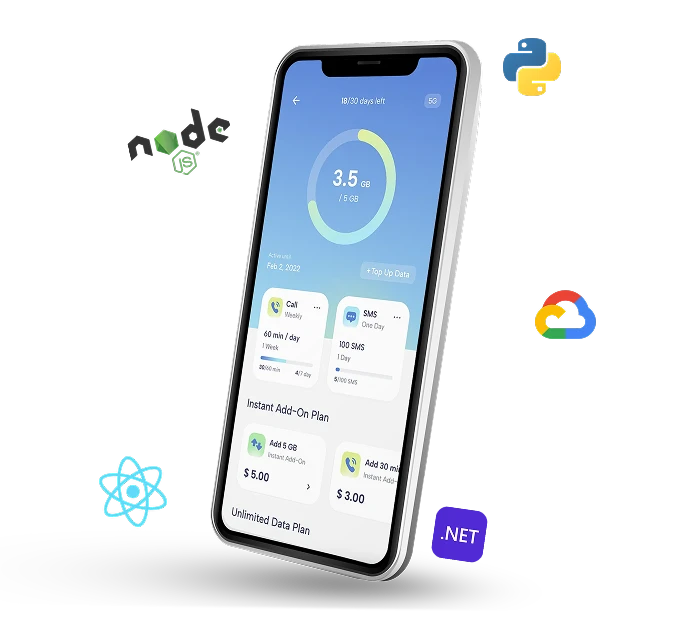
Node.js, Python or .NET on AWS, Google Cloud or Azure. PostgreSQL, MySQL, MongoDB or Firebase. Firebase Cloud Messaging for push. REST, GraphQL, webhooks and message queues as the problem requires.
Android App Modernization
We take over Android codebases other teams have stopped touching. That covers a full technical audit, incremental Java to Kotlin migration, target SDK upgrades to clear the Play Store floor, and rebuilding background work against the APIs that replaced the ones your app still calls. Most of it runs without a rewrite. Where a rewrite genuinely costs less than the repair, we say so and show the numbers behind it.
Key Benefits & Outcomes
- Java to Kotlin migration run incrementally, so the app stays shippable
- Target API compliance handled ahead of the Play Store deadline
- A code audit that tells you honestly when a rewrite is cheaper
- Architecture lifted without a full rebuild wherever the code allows
Technologies & Process
Audit first, remediation plan with effort estimates against each finding. Kotlin and Java interoperate, so migration runs module by module rather than as a cutover.
Enterprise Android Development
We build enterprise applications using enterprise that run inside an organization rather than on a store listing. That means mapping role hierarchies onto the directory you already run, connecting the app to systems that predate it by a decade, and distributing through your MDM rather than through Google Play.
Key Benefits & Outcomes
- SSO and role hierarchies mapped to your existing directory
- Offline operation for warehouses, basements and field sites
- Managed distribution through Intune, MobileIron or managed Google Play
- Audit-ready logging and access control from the first sprint
Technologies & Process
Integration audit first, because that is where enterprise timelines go. Identity through Okta, Azure AD, SAML and SCIM. Backend connections into SAP, Oracle, Dynamics, Salesforce and systems without modern APIs.
Device Matrix QA
Our Android app testing services run on real handsets against a device matrix agreed before sprint one. Device fragmentation testing catches what emulators miss: Samsung, Xiaomi and OnePlus each layer their own background restrictions, so a WorkManager job that passes in CI dies silently on a shipped Galaxy. JUnit and Espresso run on every merge, and you get the coverage matrix and a defect log.
Key Benefits & Outcomes
- A written device and OS coverage matrix agreed before development starts
- Physical-device testing across current and two-generations-back hardware
- OEM-specific background and battery behavior verified, not assumed
- Cold start, memory, frame rendering and battery profiled against set targets
Technologies & Process
JUnit and Espresso run through CI on every merge, BrowserStack for breadth, OWASP MASVS scanning on every release candidate. You receive the coverage matrix and defect log as deliverables.
Google Play Launch and Optimization
We get the app approved and then get it found. Approval means a pre-submission audit against current Play policy, the data safety and content rating declarations, and direct correspondence with reviewers when questions come back. Discovery means the listing work afterward: icon, screenshots, feature graphic and description, tested against install rate rather than keyword position. Most teams plan for the first half and inherit the second.
Key Benefits & Outcomes
- 96% first-submission approval rate across our portfolio
- Reviewer correspondence handled directly, resubmission at no charge
- Staged rollout catches problems before your full user base sees them
- Listings measured on install rate, not keyword position
Technologies & Process
App Bundle preparation, Play App Signing, data safety declarations, content rating and target API compliance, then release through internal, closed and open testing tracks. Post-launch we A/B test icon, screenshots and feature graphic through Play Console experiments.
Android Maintenance and Support
We keep shipped Android apps current and in the store. That means compatibility work against each annual release, target SDK upgrades scheduled ahead of Google’s deadline, dependency and security patching, and crash and ANR monitoring with response times written into the agreement. Android decays on a schedule, and the Play Store enforces its deadline whether you planned for it or not.
Key Benefits & Outcomes
- Compatibility work scheduled ahead of each release, not after users complain
- Crash and ANR monitoring with SLA-backed response times
- Quarterly audits covering dependencies, certificates and Play policy changes
- A predictable release cadence instead of firefighting
Technologies & Process
Crashlytics and Sentry for app-level monitoring, Datadog for backend. Every build includes 30 days of post-launch optimization at no charge before a maintenance plan begins. We take on Android apps we did not build, starting with a code audit.

You Do Not Have to Decide on Kotlin Before You Talk to Us
Send the product idea and your current install-base split. Within 48 hours a US-based solution architect comes back in writing with a platform call, the device range worth supporting and a cost band. If the answer is cross-platform, we will say so, and the recommendation is yours whether or not you hire us.
How much does it cost to build an Android app?
A native Android app of medium complexity typically costs $55,000 to $140,000. Simple builds start around $30,000. Products with AR, on-device inference, connected hardware or regulated compliance run above $140,000.
What moves the number on Android specifically?
Device breadth is the variable most teams underestimate. Supporting API 26 and up across four OEMs is a different QA engagement from supporting API 31 and up on Pixel and Samsung, and the difference is measured in weeks rather than days. After that: user role count, offline requirements, hardware features like camera, ARCore or BLE, the number of legacy systems in scope, and whether HIPAA, PCI-DSS or SOC 2 apply.
What the estimate includes.
Discovery, UX design, Kotlin engineering, backend, QA across the agreed matrix, Play Store release and 30 days of post-launch optimization. Cloud hosting, third-party licenses and the $25 Play Console fee are itemized separately.
How Long Does It Take to Build an Android App?
Portfolio average is 4.2 months from kick-off to store approval. What decides where you land is settled before engineering starts.

Under 1 hour
First response in US business hours. The first question is what your users actually run, because the OS and OEM split decides the QA scope.
Explore Our Development Process
3 days
You receive a platform recommendation, a written device and OS coverage matrix, and a fixed-fee estimate priced against that matrix rather than against a guess.
See How We Plan Projects
1–2 weeks
Your Android pod is assembled and sprint one opens with defined goals and a device list already agreed.
See How We Build AppsThen the build
What actually causes delay on Android.
Regulatory sign-off adds four to eight weeks in healthcare and finance. Enterprise security audits add two to four. Undocumented legacy systems add however long the archaeology takes. Android contributes a fourth that the other three do not explain: a device matrix left open. Agree it late and QA has no defined end, because there is always one more handset to test. We fix the matrix in discovery and price against it.
Android Apps We Build by Industry
Industry changes what the app has to survive rather than what it looks like. A logistics driver app has to work with no signal in a loading bay. A healthcare app has to log every access event before it does anything else. A retail app is judged on one number, which is completed purchases. Find your sector below and explore how our android app development services cater your exact needs.
-
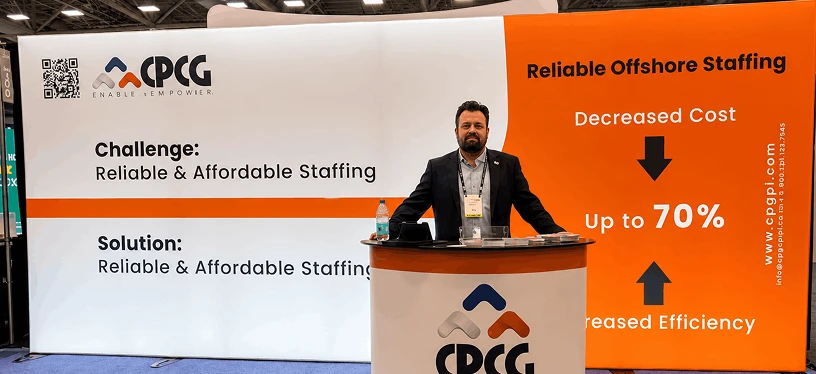
As a healthcare Android app development company, we build telemedicine platforms, patient portals, remote monitoring, e-prescription and clinical workflow tools, with EHR integration through HL7 and FHIR. PHI is encrypted at rest and in transit, and every access event is logged. Our CPCG build replaced five fragmented tools on go-live day. For hospitals, private practices and healthtech companies.
-
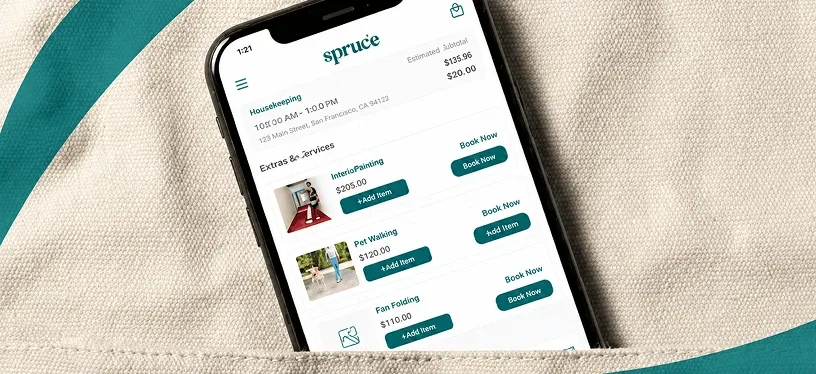
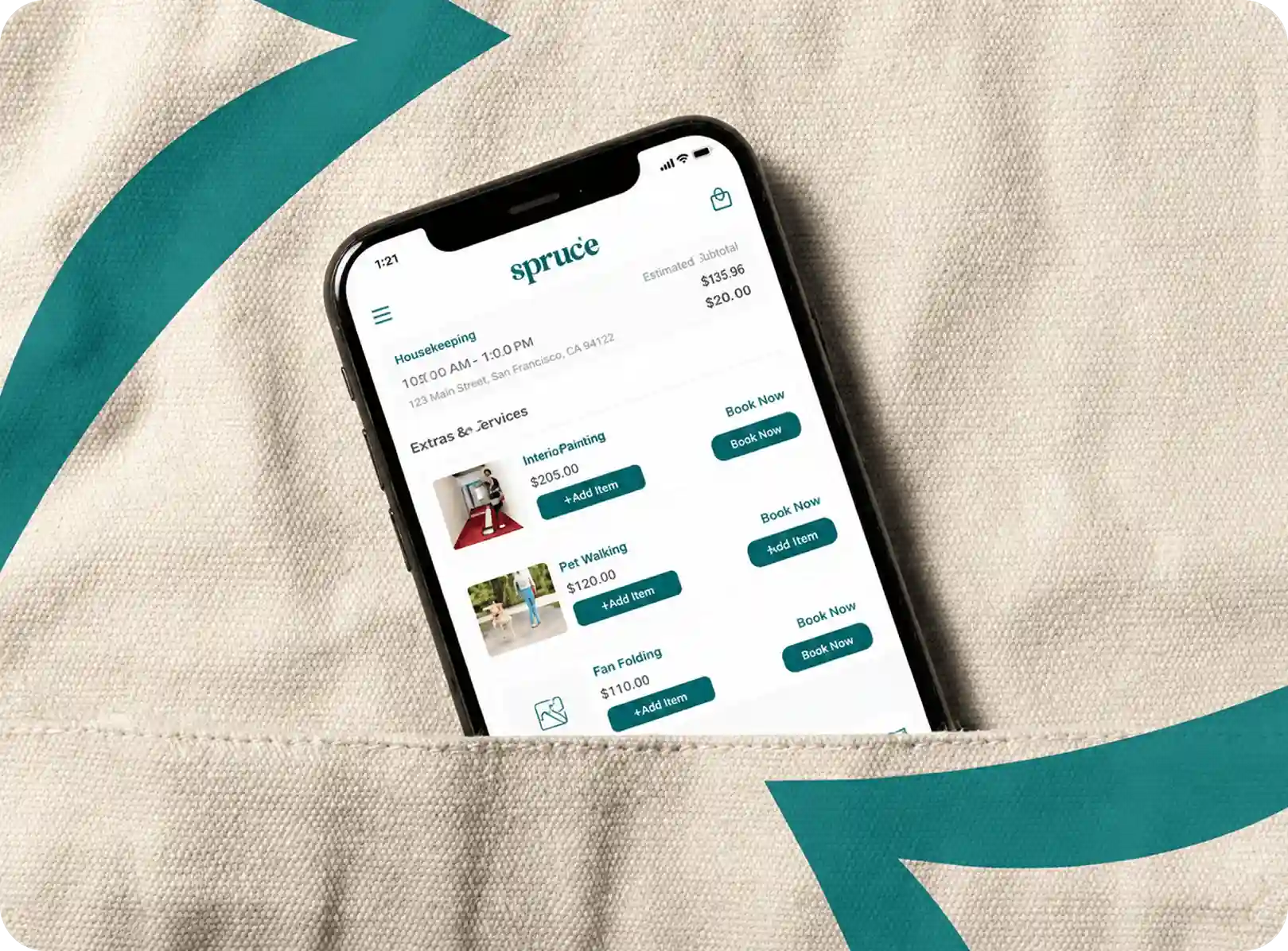
Our Android app development services for real estate cover property search, virtual tours, tenant and owner portals, maintenance requests, rent collection and MLS or IDX integration. The Spruce platform we rebuilt carries 685,000+ customers and 7,581 property management companies. For brokerages, property managers and proptech companies.
-
Android logistics app development is the clearest case for the platform in our portfolio: ruggedized handsets are cheap at fleet scale, and every build is offline-first because drivers lose signal in warehouses and tunnels. We build driver and fleet apps, shipment tracking, proof of delivery, warehouse scanning and route optimization. For freight forwarders, 3PLs and last-mile operators.
-
We develop Android learning apps covering learning management, live and recorded classes, adaptive assessment, certification and offline course delivery. Nokia Al-Saudia onboarded 10,000+ learners on the platform we built and cut admin processing time 35%. For schools, universities and edtech companies.
-
Our retail Android app development work covers native shopping apps, multi-vendor marketplaces, headless commerce, subscription platforms, loyalty and Google Pay one-tap checkout. Built against completed purchases rather than session length. For D2C brands, retailers and marketplace operators.
Secure Android Architecture, Compliance, and Full Code Ownership
Android permits sideloading, and rooted devices are common enough that we treat them as the baseline rather than the exception. Every design decision below assumes the device is compromised and the APK has been decompiled.
Secure Architecture From Day One
Credentials live in the Android Keystore, never in the APK bundle or shared preferences. Sensitive logic stays server-side where a rooted device cannot reach it. Secure API layers, encrypted transfer, role-based access and controlled permissions from the first sprint.
Compliance-Aware Development
Healthcare, fintech and commerce builds are designed with compliance-ready workflows, including HIPAA-aware data handling and PCI-aware payment flows, scoped in discovery rather than retrofitted before launch.
Ownership Without Vendor Lock-In
You receive source code, repositories, design files, documentation, deployment notes and the Play Console account, so you can maintain and scale independently.

Secure APIs
Protected endpoints, TLS 1.3 in transit, AES-256 at rest.

Access Control
Role-based permissions, OAuth 2.0 with JWT, BiometricPrompt where the product calls for it.

Play Integrity
Device and app integrity verification, plus OWASP MASVS scanning on every release candidate.

Full Handoff
Complete codebase, documentation, deployment assets and Play Console transfer at launch.
Launch with the product, the codebase and the Play Console account you need to scale without depending on us.
Where the Android Process Differs
The delivery framework stays consistent across platforms, but Android adds another layer of engineering complexity. The difference is not in the number of stages, it is in the decisions made within them.

Discovery produces a device contract, not just a brief
Alongside the product brief, discovery ends with a written device and OS coverage matrix: minimum API level, OEM list, screen size classes and foldable states. This is the single most useful artifact on an Android project, because it converts “test on Android” into a finite scope. We price the estimate against it. If you want the matrix widened later, we quote the difference rather than absorb it silently into the timeline.
QA runs against OEM behavior, not against stock Android
Emulators run stock Android with no battery management. Samsung, Xiaomi and OnePlus each layer their own background restrictions on top of the platform, and a WorkManager job that behaves correctly in CI gets killed silently on a shipped Galaxy. We test the background, notification and battery paths on physical hardware from each OEM in the matrix.


Release is scheduled around Google's deadline, not yours
Google raises the target API level requirement annually and enforces it by delisting updates. We put that date in the plan at kickoff and schedule compatibility work ahead of it. Staged rollout runs through internal, closed and open testing tracks, so a regression reaches 1% of users rather than all of them.
Three Ways to Hire Android Developers
Android capacity is usually the constraint rather than mobile capacity in general. Teams have an iOS engineer and no Kotlin, or a Kotlin engineer and no bandwidth before a store deadline. Whether you need a full android app development team or a single specialist, all three models below staff from the same pool of Android developers with five or more years of production work.
Companies without in-house mobile engineering capabilities who need a turnkey solution.
A complete product squad comprising:
Teams with an Android gap or a deadline problem needing immediate specialized talent.
Hire expert Android app developers who integrate
seamlessly into your existing workflows:
Long-term products with a continuing roadmap and need for deep domain knowledge.
A dedicated Android development team with a
named tech lead, month to month, so nobody re-
learns your codebase.

Bring Your Device Analytics to the First Call
Thirty minutes with a solution architect. If you have Play Console or analytics data, bring it, because the OS and manufacturer split in your existing user base is the fastest route to an accurate estimate. You leave with a platform call and a cost band. The written Product Brief follows in three business days, NDA first.
Android Apps We Have Shipped
Two native builds and two cross-platform, so you can see the reasoning rather than take the claim.
Native Kotlin Where Booking Speed Decides Conversion
A booking platform built separately in Kotlin for Android and Swift for iOS. Cross-platform would have shipped sooner and cost less, and we recommended against it, because response time in the booking sequence was the product rather than a detail of it. Delivered in eight months.



Our Android Technology Stack
Stack follows the shape of the problem. Each choice below exists for a reason we can state.
Kotlin is the default for new products because null safety and structured concurrency remove entire categories of production crash. Jetpack Compose gives declarative UI that adapts across window size classes without a parallel tablet codebase.



Structure decides whether your future team can maintain the app. Modular so features are worked in parallel and tested in isolation.


Backend follows your existing stack and traffic expectations rather than our habits.







Reproducible builds and automated coverage are what allow a two-week cadence without regression.


Applied where they solve a user problem rather than added as a feature list.


Choosing an Android App Development Company
Every Android app development company you shortlist will show you a portfolio and a process diagram. Six things actually separate them, and here is where we stand on each.
The engineer on your build has shipped Android specifically, not React Native with an Android target. That distinction shows up in Compose recomposition, WorkManager constraints and the OEM battery restrictions Samsung and Xiaomi apply differently from stock Android. A US-based solution architect leads the engagement.
Amaya went native. Coca-Cola and Spruce went cross-platform. All three recommendations are above with numbers attached. A firm that recommends native every time is selling hours rather than judgment.
You get a written coverage matrix before sprint one and the estimate is priced against it. Vendors who quote "Android" without defining the device range are quoting a scope neither party can close.
Source code, repositories, design files, cloud accounts and the Play Console account transfer as work is delivered rather than at the end. If the engagement stops, you keep everything produced to that point.
Our pre-submission audit tracks every Google Play policy change. When a submission comes back with questions, we handle the reviewer correspondence and resubmit at no charge.
350+ mobile apps shipped, 1M+ active android users, Inc. 5000 listed, Clutch 1000, 4.7 out of 5 on Clutch, and proof of work with top enterprises, Fortune 500 companies as well as startups.